

Ahh, engagement.
The term that means so much yet, paradoxically, so little.
Is it whether an employee feels good about their boss? Their team?
 Is it if an employee recommends their employer to their own network as a 'great place to work?'
Is it due to tenure; the point at which an employee indicates they are no longer looking elsewhere for employment?
First, a few external definitions on engagement before I share some of my own.
Towers Perrin / Watson Wyatt suggest employees need both the will and the way to actually demonstrate engagement.
Is it if an employee recommends their employer to their own network as a 'great place to work?'
Is it due to tenure; the point at which an employee indicates they are no longer looking elsewhere for employment?
First, a few external definitions on engagement before I share some of my own.
Towers Perrin / Watson Wyatt suggest employees need both the will and the way to actually demonstrate engagement.
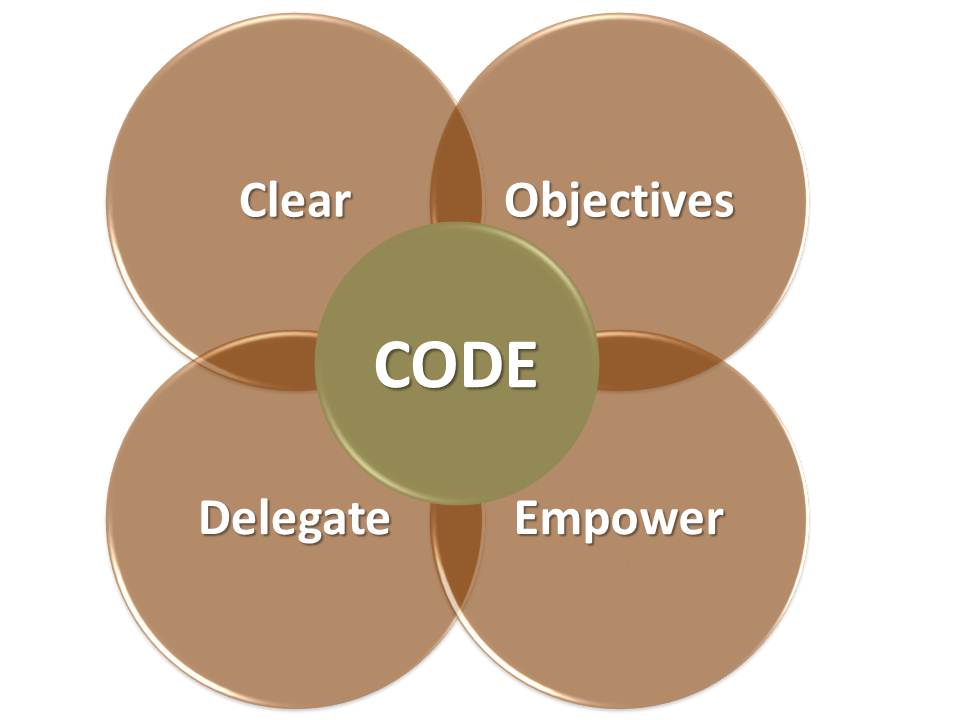 Clear Objectives is both at an organizational level as well as at an individual level — ensuring the employee is clear with the direction of the company and what should be mutually developed as team or personal objectives is a critical step in the ‘engagement’ process.
Delegate and Empower is the contrarian view of micro-managing and it becomes the de facto first strike of a trusting relationship. When a manager of anyone or any team both delegates and empowers, it becomes the behavioural smoking gun of ‘engagement’.
Put the CODE together and you have yourself an employee who genuinely feels they can be trusted to do the right thing given any defined circumstance.
The circumstance is defined by ‘clear objectives’.
The employee is then ‘trusted’ by acts of delegation and empowerment by the manager.
That’s my definition of ‘engagement’ and I’m sticking to it.
Clear Objectives is both at an organizational level as well as at an individual level — ensuring the employee is clear with the direction of the company and what should be mutually developed as team or personal objectives is a critical step in the ‘engagement’ process.
Delegate and Empower is the contrarian view of micro-managing and it becomes the de facto first strike of a trusting relationship. When a manager of anyone or any team both delegates and empowers, it becomes the behavioural smoking gun of ‘engagement’.
Put the CODE together and you have yourself an employee who genuinely feels they can be trusted to do the right thing given any defined circumstance.
The circumstance is defined by ‘clear objectives’.
The employee is then ‘trusted’ by acts of delegation and empowerment by the manager.
That’s my definition of ‘engagement’ and I’m sticking to it.
Employees need the will: the sense of mission, passion and pride that motivates them to give that all-important discretionary effort. And they need the way: the resources, support and tools from the organization to act on their sense of mission and passion.Not to be outdone, another behemoth HR consulting merger, AON Hewitt, defines engagement as the point at which employees:
My thoughts? I think it comes down to one thing. An employee can be considered ‘engaged’ when they:
- Speak positively about the organization to co-workers, potential employees and customers,
- Have an intense desire to be a member of the organization, and
- Exert extra effort and are dedicated to doing the very best job possible to contribute to the organization's business success
genuinely feel they can be trusted to do the right thing given any defined circumstance.That’s it. If an employee feels part of a solution, entrusted to act positively and productively (be it for an internal project, a remedial task, a customer situation, etc.), and permitted to innovate, collaborate, communicate and perform in ways that ensure the objective is successfully completed … that employee will feel engaged. It’s not about money. It’s not about Herman Miller Aeron chairs. It’s not about buzz word bingo. It’s about the CODE. To get to a point where the employee feels as though they are in fact trusted to do the right thing given the defined circumstance, managers need to begin using the CODE.
Clear Objectives is both at an organizational level as well as at an individual level — ensuring the employee is clear with the direction of the company and what should be mutually developed as team or personal objectives is a critical step in the ‘engagement’ process.
Delegate and Empower is the contrarian view of micro-managing and it becomes the de facto first strike of a trusting relationship. When a manager of anyone or any team both delegates and empowers, it becomes the behavioural smoking gun of ‘engagement’.
Put the CODE together and you have yourself an employee who genuinely feels they can be trusted to do the right thing given any defined circumstance.
The circumstance is defined by ‘clear objectives’.
The employee is then ‘trusted’ by acts of delegation and empowerment by the manager.
That’s my definition of ‘engagement’ and I’m sticking to it.


